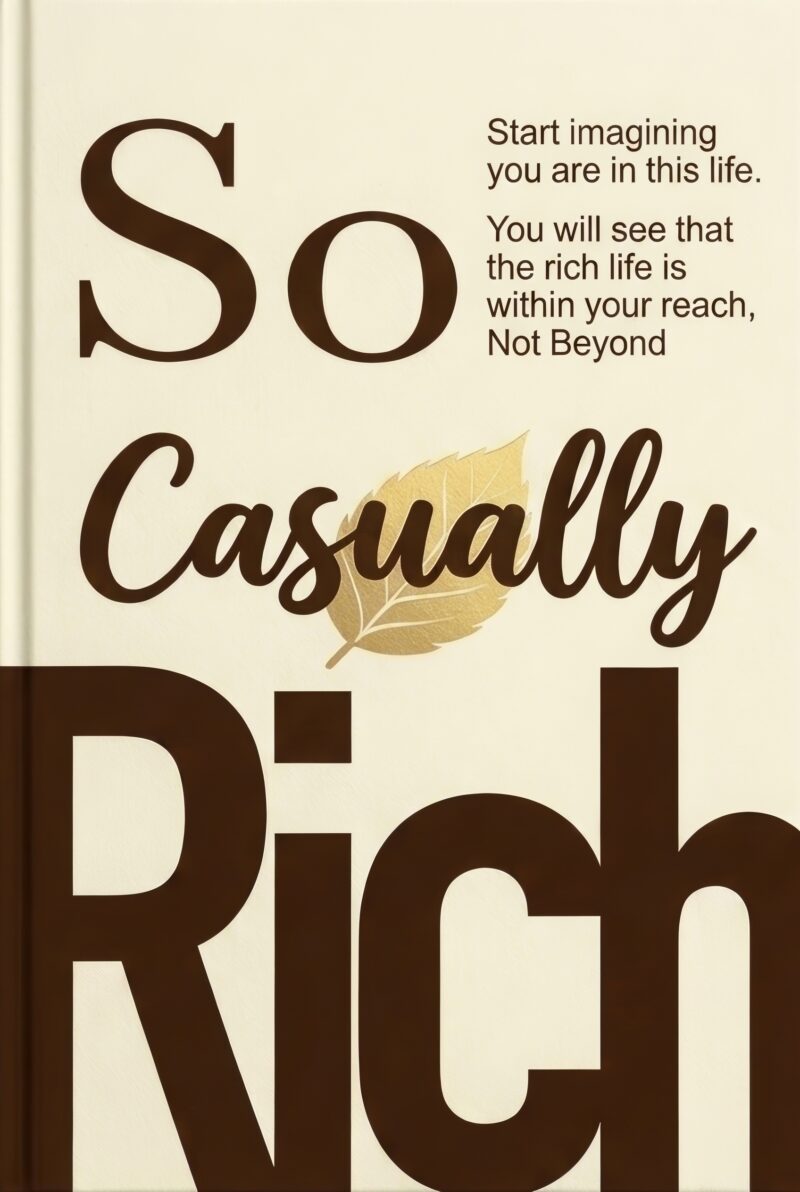
So Casually rich
Freedom of time: 30s
Freedom of time: 40s
Freedom of Time: 30s
In His Thirties
His kids are under five. The business is stable now — not perfect, still evolving, but running in a way that does not require him to be present every hour for the income to continue. He has built something that earns while he thinks, while he sleeps, while he sits with his children on a Tuesday morning, doing absolutely nothing productive by any employer’s definition.
That Tuesday morning. He is at his desk while his youngest is still asleep and his wife has taken the older one to nursery. He has a coffee. He opens a notebook, not a laptop. He is thinking about the next project — whether to expand what is already working or to start something alongside it that would open a second income stream. Both options are on the table. He has the time to sit with both, to research properly, to be wrong about one of them, and correct it without the pressure of a quarterly review or a manager waiting for a decision by the end of the week. He is his own timeline.
When his wife gets back, he closes the notebook. They talk about the family trip they have been thinking about. The season they want. The destination the kids are old enough to appreciate. They pull up flights and book them — not after checking whether the dates clash with anyone’s requirements, not with the low-level anxiety of someone who needs to phrase the request carefully to avoid looking uncommitted. They book them because it is the right time for their family, and that is the only consideration in the room.
In the evenings, he puts the kids to bed without rushing. He reads with them longer than strictly necessary because there is no reason to cut it short. He is not mentally already in tomorrow’s early start. He is here, in this room, with these children, for as long as it takes. He knows what his friends are doing at this stage — extra shifts, longer hours, building toward a promotion that will give them slightly more of what they are already running out of. He is doing something different. He is building his second decade while they are spending their first.
None of this feels remarkable to him. It feels like the plan is working.
Freedom of Time: 40s
His kids are around ten. The first business is more efficient than it was in his thirties — he spent that decade improving it, and the improvement compounded. He built a second income stream in his mid-thirties, and that one is running now, too. The combined income is more than comfortable. The combined time required to manage it is less than he expected, because systems, when properly built, tend to become more efficient rather than less as they mature.
Wednesday morning. He drives his daughter to school. Not because there is no other option — there is a perfectly good bus — but because this twenty-minute drive is when she talks. About her friends, about what is stressing her out, about something that happened at school that she has not worked out how to feel about yet. He knows what is happening in her life in real time, not assembled from fragments overheard across a busy evening. He is the parent who is there. Not because he is exceptional — because he built a life in which being there is structurally possible.
After drop-off, he goes to his parents. No particular reason. His father’s health has been something he is keeping an eye on, and sitting with them for an hour over coffee is as good a way to do that as any formal check-in. He is not managing their situation from a distance, delegating his concern to phone calls between other obligations. He is physically present regularly because his schedule allows it. When a health issue requires something more urgent, he goes immediately. There is no leave to request, no explanation to give, no income that pauses while he handles the thing that matters.
His forties are not a decade of pushing toward something he hopes will arrive eventually. They are the compounding return on the work he did in his twenties and thirties, lived out in ordinary Wednesday mornings that look unremarkable from the outside and feel, from the inside, like exactly the life he was building toward. He does not describe it as freedom, particularly. It is just how things are. That is what freedom feels like when it has been present long enough to stop feeling exceptional.