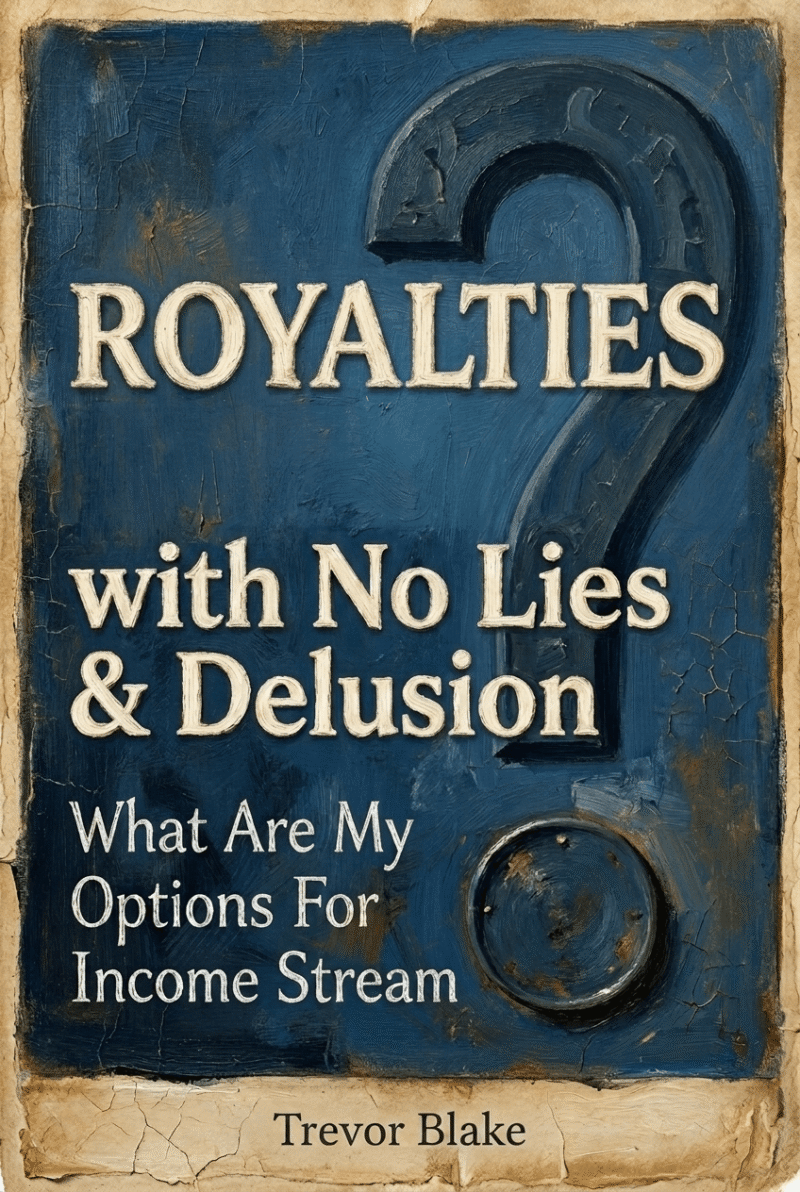
Royalties with No Lies & Delusion


The System Before the Product


This is the most important chapter in this book. I want to say that plainly before we go any further, so that you carry it with you as you read.

Everything in Part One was about clearing the fog — the myths, the distortions, the psychology that leads people astray before they even begin. This chapter is different. This chapter is about what actually drives passive income, what sits underneath every income stream that works, and why almost everyone who fails misses it entirely. Not because they lacked talent. Not because the market was against them. But because they skipped this part.

So if there is one chapter in this book you read slowly, take notes on, and return to — this is it.

What a Business Model Actually Is — and Why Most People Skip It


The term business model sounds like something that belongs in a boardroom, not in a conversation between two people talking about income streams. But strip away the corporate language, and it is really just a simple question: how does this thing work?

Specifically: how does your income stream find the people who need it, earn their attention, build enough trust to convert that attention into a purchase, and then do that again and again without you having to start from zero each time? That is a business model. And the reason most people skip building one is that it feels abstract and slow compared to the urgency of just making something and putting it out there.

But here is what happens when you skip it. You create a product — a template, a print-on-demand design, an affiliate blog, a course — and you launch it into the market. And then nothing happens. You wait. Still nothing. You wonder if the product is wrong, if the platform is the problem, if the market is saturated. You tweak the product, maybe try a different platform. Still nothing, or very little. Eventually you conclude that this particular income stream does not work, and you move on.

What you did not see is that the product was never the problem. The model was missing. There was no clear answer to how the right people would ever find this thing, why they would trust it enough to buy it, or what would bring them back. Without those answers baked into a structure, even a genuinely excellent product will sit in silence.

A business model is not glamorous. It does not feel creative. Building one requires you to think before you make, to research before you launch, and to design the system that will carry the product before the product even exists. Most people find that uncomfortable. But it is the foundation that everything else rests on.


The Difference Between a Product and a System


A product is what you make. A system is what makes your product work.

This distinction matters more than almost anything else in this book. It is the difference between someone who puts a digital template on Etsy and someone who builds a template shop that earns consistently. It is the difference between someone who publishes a micro-course and someone whose course keeps getting enrolled in months after launch. The product may be identical. The system is not.

A system, in this context, is the connected set of structures that brings people to your product, builds enough trust to convert them, and keeps working after you have stepped back. It includes how your work is discovered — through search, through content, through social channels, or through platforms. It includes how people move from discovering you to trusting you. It includes how a first-time buyer becomes a repeat buyer, or how a follower becomes a customer. And it includes the automated or semi-automated processes that keep all of this moving without requiring your constant, manual attention.

Most people build the product and assume the system will somehow appear on its own. It will not. Platforms do not build your system for you. They give you infrastructure — a storefront, a hosting service, a search function — but the actual system that connects your work to the people who need it is yours to design and build.

This is why two people can list similar products on the same platform, in the same category, at the same price — and one earns consistently while the other earns nothing. The products may look similar from the outside. But one person built a system around theirs, and the other did not.

continue….

I hope this excerpt interests you.

If you want a full book, you can:

Buy a single book
Full Price
Borrow for 3 days
Cheaper price
Join a Membership
More Access at low price

Other books with a different focus